

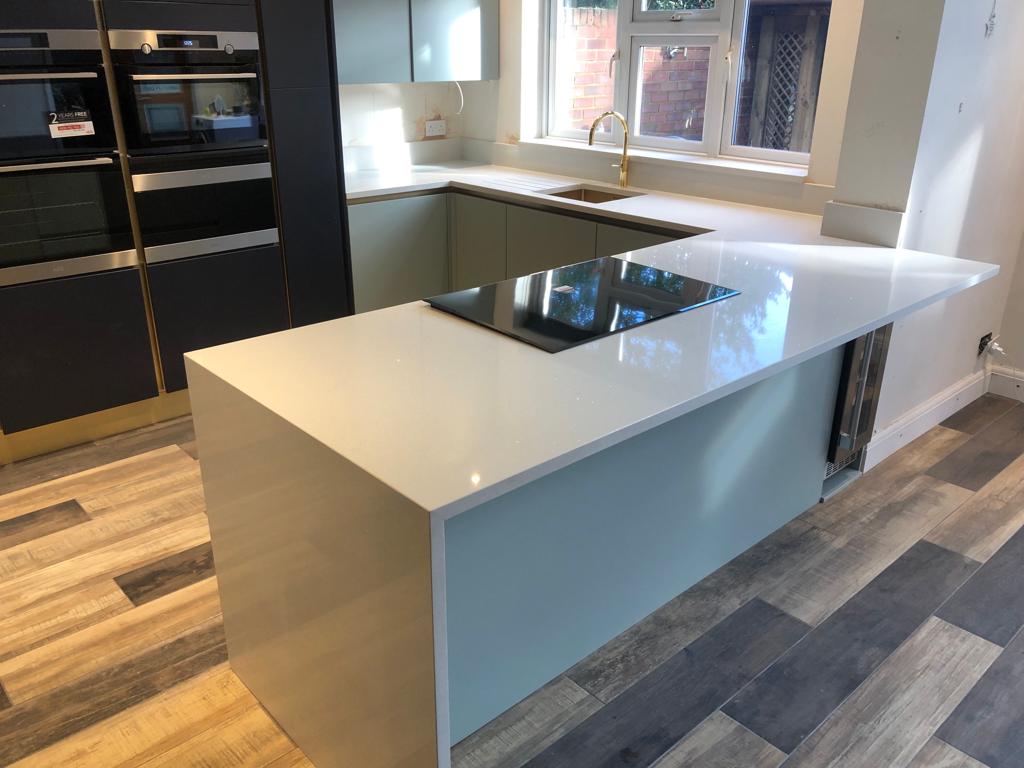
Quartz worktops are popular in North London kitchens for good reason. They are hard-wearing, they look smart for years and they need very little maintenance. The short version of how to look after one is simple: wipe it daily with warm soapy water and a soft cloth, clean up spills promptly, and always use a trivet under hot pans.
A few details are worth knowing, though, because the habits that suit other surfaces can damage quartz.
What quartz worktops are made from
Quartz worktops are an engineered stone. They are made from crushed natural quartz, typically around nine-tenths of the material, bound together with resins and pigments, then pressed into slabs. That combination is what makes them so tough and non-porous. It also explains their two weak points: the resin binder can be damaged by strong heat and harsh chemicals.
Daily cleaning
Day-to-day cleaning is easy. Use a soft microfibre cloth and warm water with a little washing-up liquid, then dry with a clean cloth to avoid streaks. That is enough to remove grease, crumbs and fingerprints.
Avoid scouring pads, wire wool and abrasive powders. They can dull the polished surface over time, and the damage is difficult to reverse.
Dealing with spills
Because quartz is non-porous, liquids do not soak in the way they can with marble or some granites. That makes it far more stain-resistant than natural stone.
Spills such as coffee, red wine, tea, turmeric and oil can still leave marks if they sit for hours, so wipe them up promptly. For dried-on marks, use a non-abrasive cream cleaner and a soft cloth, working gently over the area. For stubborn residue such as dried food, a plastic scraper held flat can lift it without scratching.
Protect it from heat
This is the most important rule. Quartz handles warm items well, but extreme or sudden heat can damage the resin and cause discolouration or, in the worst cases, thermal shock cracking. Always put hot pans, oven trays, slow cookers and boiling kettles on a trivet or heat mat. Avoid placing hot pans directly near a joint or cut-out, where the worktop is more vulnerable.
Avoid harsh chemicals
Oven cleaners, paint strippers, drain cleaners, bleach and strong solvents can attack the resin and leave dull or discoloured patches. If one of these is spilled, wipe it up immediately and rinse with clean water. For routine cleaning, a pH-neutral cleaner is the safest choice.
Other good habits
Use a chopping board rather than cutting directly on the worktop. Quartz is highly scratch-resistant, but knives will blunt quickly, and a dropped heavy pan can chip an edge. Avoid standing on worktops to reach high cupboards, as concentrated weight near an edge or sink cut-out can cause damage.
Common mistakes we see
The problems we are most often called about come from a handful of habits: hot pans placed straight on the surface, bleach-based sprays used daily, abrasive pads used to remove dried food, and pressure from heavy appliances near joints. Each is easy to avoid once you know about it.
When to call a professional
If your worktop has a chip, crack or mark you cannot remove, contact a specialist before trying to fix it yourself. Small chips can often be repaired, and getting advice first avoids making the damage worse. If a worktop is badly damaged or simply worn out after many years, replacement may be the more sensible option.
Quartz worktops from MA Granite
Good care starts with good installation. Accurate templating, properly supported joints and well-finished cut-outs all help a quartz worktop last. At MA Granite, we are a local granite and quartz worktop specialist, providing design, templating and installation, and we have served homeowners across the area for 21 years.
If you are thinking of upgrading to quartz worktops in North London, or you need advice about an existing worktop, get in touch with our team.
